⸻
🔥 What a Wood-Fired Water Heater Is
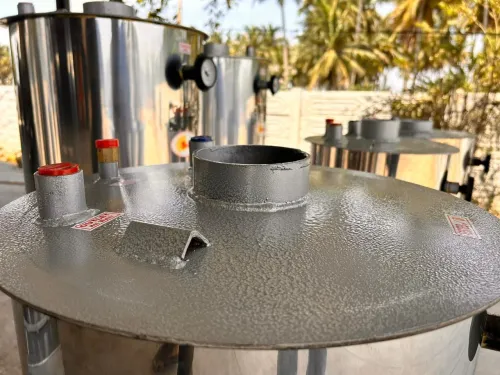
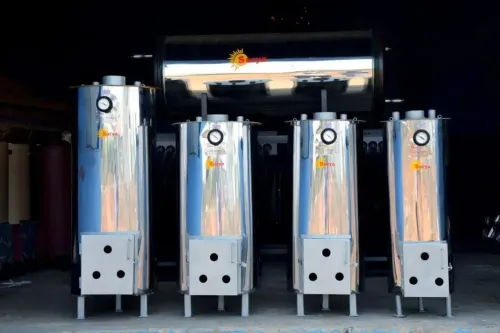
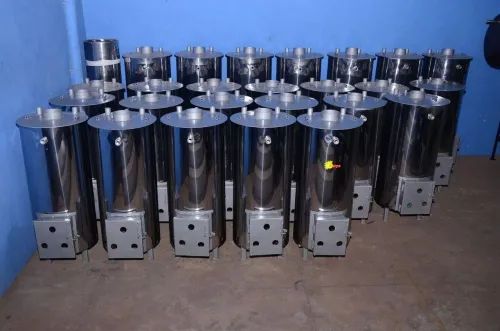
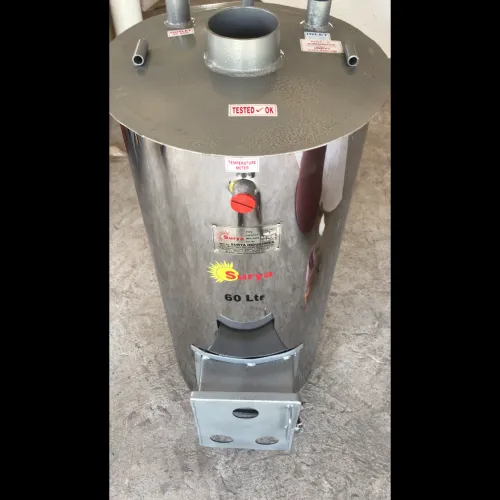
A wood-fired water heater (also called a “wood boiler” or “firewood geyser”) uses wood or biomass as fuel to heat water stored in a metal tank. It’s ideal for rural areas, hostels, temples, or ashrams where hot water is needed for many people.
⸻
⚙️ How It Works
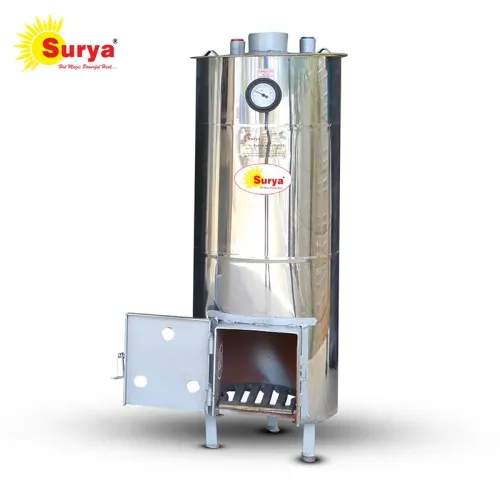
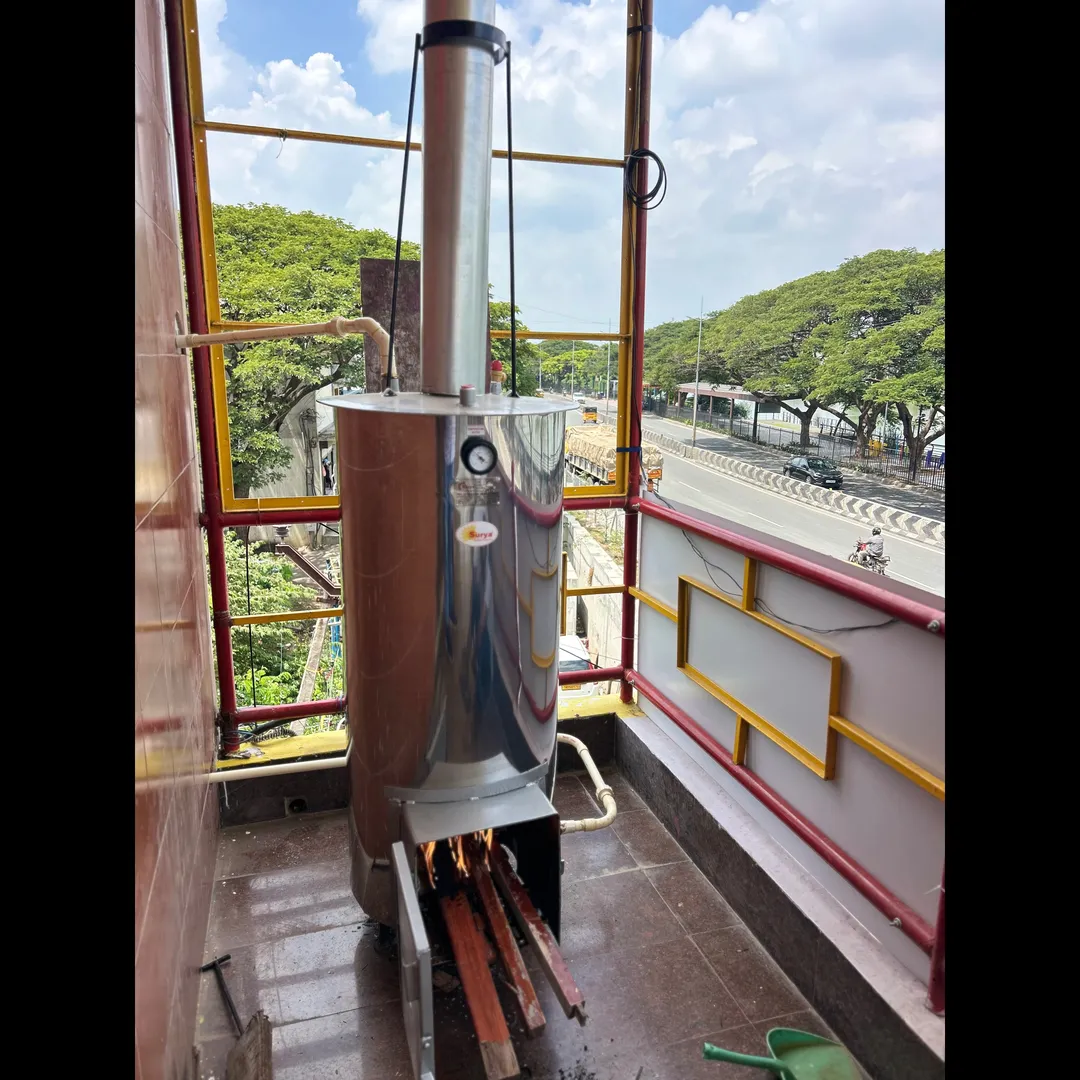
1. Fire chamber (furnace): You burn wood, coconut shells, or other biomass here.
2. Heat exchanger: The heat from the fire passes through metal pipes or a coil surrounded by water.
3. Storage tank: Hot water is stored in or sent to a tank for bathing, kitchen, or washing use.
4. Chimney outlet: Smoke exits safely through a flue pipe or chimney.
⸻
🌿 Advantages for an Ashram or Hostel
• Low operating cost: Uses freely available wood or agricultural waste.
• Off-grid friendly: No electricity required.
• Durable and simple: Easy to maintain, minimal moving parts.
• Eco-friendly: Can use renewable biomass fuel.
⸻
⚠️ Considerations
• Needs regular fuel feeding and ash removal.
• Should be installed outdoors or in a well-ventilated area for safety.
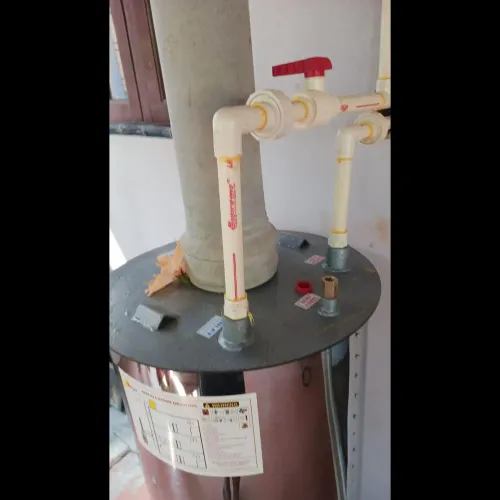
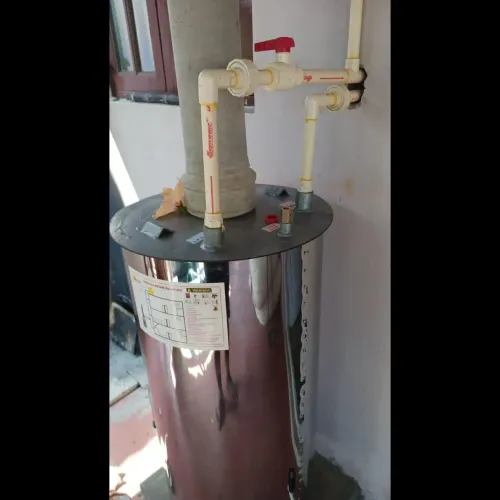
• Add a temperature and pressure relief valve for protection.
• Use insulated pipes to reduce heat loss to bathrooms or kitchen.
⸻
🏗️ Common Models in India (for example)
• Vijaya Wood Fired Water Heater
• Hot Stream Eco Fire Geyser
• Surya Wood Fire Water Boiler
• Anil Fire Wood Geyser
Capacity ranges from 50 to 500 liters, depending on your need.
⸻
💧Example Setup for an Ashram
For an ashram with 20–30 residents:
• 1 unit of 200–300 liters capacity.
• Install near bathing area.
• Daily wood requirement: about 5–10 kg of dry wood.
• Optional: connect to solar water heater for hybrid use.
Keywords